
Family-owned · Atlanta Local
Trim Work and Baseboard Installation
Crown molding, baseboards, and door casing finished clean by the same crew doing your floors.
Free estimate
Tell us what you need
Three fields. It reaches a person here, not a call centre.
Trim Work That Finishes the Room
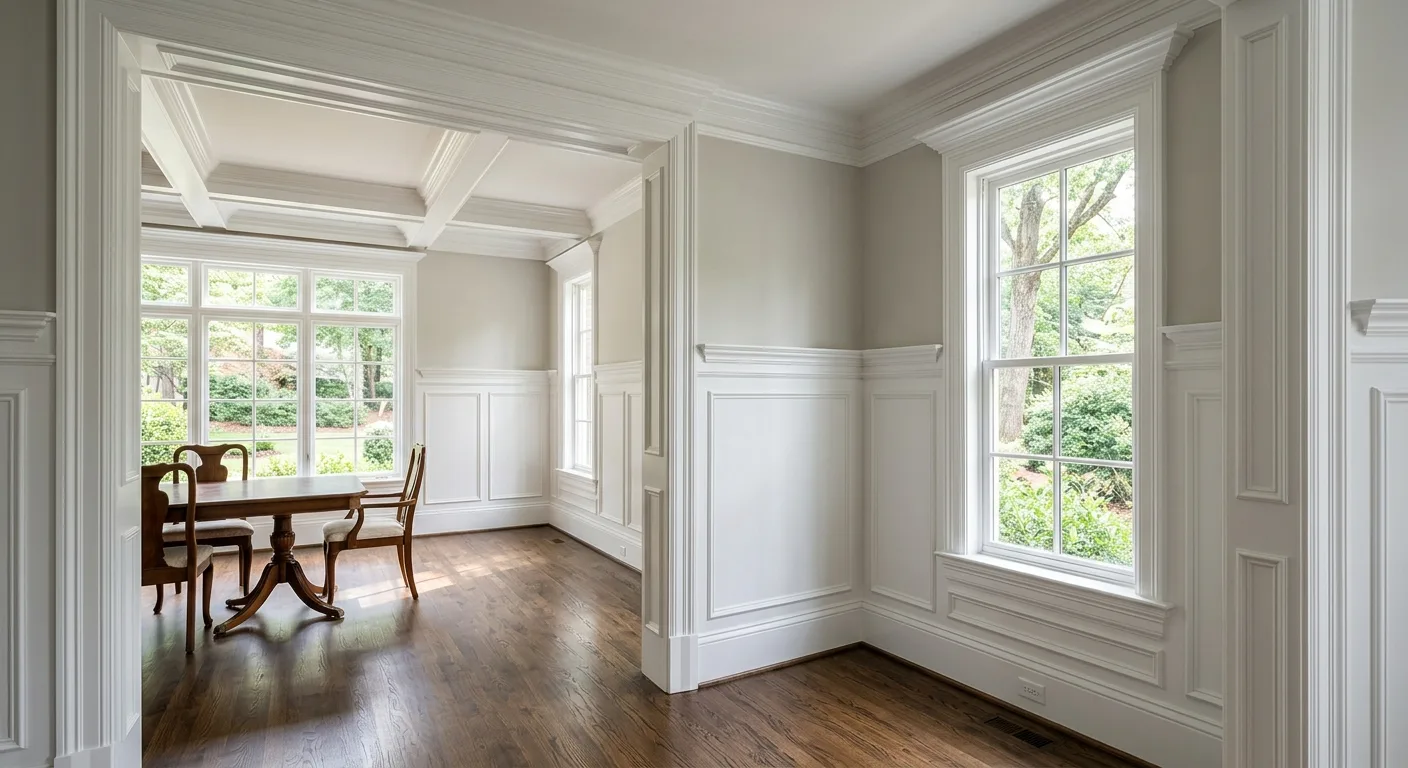
Trim work covers the baseboards, crown molding, door casing, window casing, chair rail, and any other finish carpentry that gives a room its final, polished look. Abner Flooring and Remodeling installs and replaces interior trim throughout the Greater Atlanta metro, handled by owner Chucky Sarmiento and the same crew that installs your flooring. If you're comparing contractors and wondering whether to bundle trim with a flooring project, the answer is almost always yes: the floor goes in, the old base comes off, and installing new trim while everything is already moved out saves you a second scheduling headache and usually produces a cleaner result. Call (404) 706-8999 any day of the week to talk through what your room needs.
What determines the cost and complexity of a trim job? Mostly three things: the profile you choose, the number of linear feet involved, and the condition of the walls. A simple colonial baseboard on flat drywall goes in fast. Crown molding in a room with out-of-square corners, a cathedral ceiling, or irregular walls takes more time to cut, fit, and cope correctly. If the drywall behind the old trim is damaged, that gets addressed before the new piece goes up. Material matters too: finger-jointed pine is the standard paint-grade choice, while solid poplar or MDF holds paint better over the long term in high-humidity rooms. Every job is different -- contact Abner Flooring and Remodeling for an accurate estimate.
Every Type of Interior Trim We Install
One crew handles all of it, start to finish, no subcontractors.
Baseboard Installation
The workhorse of interior trim. We pull the old base, address any wall damage behind it, and install new profile at consistent height. Mitered outside corners, coped inside corners -- not butted.
Crown Molding
Crown takes patience on inside and outside corners, especially in older homes where walls aren't plumb. We cut spring angles correctly and don't use filler blocks to hide bad cuts.
Door and Window Casing
New doors and windows need casing that sits flat and looks intentional. We match the profile to what's already in the room so it doesn't look like a patch job.
Chair Rail and Wainscoting Cap
Chair rail divides a wall cleanly and takes more care at inside corners than most people expect. We level it across the room, not just eyeball it from one wall to the next.
Stair Treads and Skirt Boards
Stairs are some of the most-noticed trim in a house. We install skirt boards and nosing to match the stair profile and the flooring material going in.
Shoe Molding and Quarter Round
The small pieces matter. Shoe molding covers the gap between flooring and base, and it should follow the floor plane, not the wall. We nail it to the baseboard, never the floor.
Our Process
How a Trim Install Actually Goes
- 01
Measure and Cut
We measure every wall run, mark the miter angles for each corner, and cut pieces individually. We don't cut a whole room and then test fit -- every piece gets checked before the next one is cut.
- 02
Fit and Nail
Inside corners get coped, not mitered. Coped joints close tighter when the house moves, and they look better over time. We nail through the face into the stud or plate, countersink, and fill.
- 03
Caulk and Prep for Paint
Every joint, every nail hole, every gap between trim and wall gets caulked and sanded smooth. We leave it ready for your painter or our own interior painting crew to finish.
The Bundling Advantage
Why Trim Gets Installed with the Floor, Not After
- Old trim removed before flooring goes in
- New base installed after flooring settles
- Reveal height set to match the new floor thickness
- No gaps between floor edge and baseboard
- Shoe molding nailed to base, floats over the floor
What Makes the Difference on a Trim Job
What Abner Flooring and Remodeling brings to every trim job:
- Coped inside corners, not butted
- Coped joints close tighter over time and don't open a gap when the wall flexes.
- Available 7 days a week
- Most trim work is tied to a larger project. We don't go dark on weekends when your schedule demands it.
- One crew for floors and trim
- No handoff between contractors. The same people who pulled your old base come back to install the new one.
- Left ready for paint, not left rough
- Every nail hole filled, every joint caulked. We hand it off in paintable condition.
Trim Work -- Common Questions
What's the difference between coped and mitered inside corners?
How do I know what baseboard profile to choose?
Can trim be replaced without repainting the walls?
How much does a full-house trim replacement cost?
Do you replace just one damaged section of baseboard or the whole room?
Does quarter round or shoe molding actually matter?
Trim Installation Across the Metro
We install and replace interior trim throughout the Greater Atlanta metro, available any day of the week. If you're in any of these areas and need baseboard, crown, or casing work -- especially alongside a flooring project -- call (404) 706-8999.
Ready to Finish the Room Right
New floors deserve trim that fits. Call Chucky and the Abner crew any day of the week.