
Family-owned · Atlanta Local
Fix Flooring Right the First Time
From a single damaged plank to a subfloor that's soft underfoot, we diagnose the problem and fix it right the first time.
Free estimate
Tell us what you need
Three fields. It reaches a person here, not a call centre.
How We Fix Flooring Problems
Abner Flooring and Remodeling helps homeowners and investors fix flooring throughout the Greater Atlanta metro, covering everything from isolated plank replacement to full subfloor corrections before new material goes down. If your floor is squeaking, cupping, cracking, or shifting underfoot, call (404) 706-8999 and we'll take a look, any day of the week. We work on hardwood, LVP, laminate, tile, and everything in between, so you're not calling a specialist for one surface and a generalist for another.
The cost of a flooring repair depends almost entirely on what's underneath. A surface-level scratch or a single popped plank is a straightforward fix. But when moisture has reached the subfloor, or when a section of hardwood has started cupping because the vapor barrier was never installed properly, the scope changes. We pull up what's failing, address the root cause, and install replacement material that matches what's already there as closely as the market allows. Skipping the root cause is the only repair that doesn't hold. Every job is different -- contact Abner Flooring and Remodeling for an accurate estimate.
What Floor Damage Actually Looks Like
Some problems are obvious. Others hide until they get worse.
Cupping and Crowning
Hardwood planks that arch upward at the center (crowning) or dip at the edges (cupping) are reacting to moisture. The planks themselves may be fine -- the problem is usually in the subfloor or vapor control beneath them. We dry out the assembly, replace any compromised material, and re-acclimate before we close it up.
Squeaky or Bouncy Floors
A floor that squeaks or gives slightly when you walk on it usually has fastener failure or a subfloor gap. On hardwood and engineered floors, we can often re-secure planks from below without touching the finished surface. When the bounce is structural, we address the subfloor directly before it compounds.
Cracked or Chipped Tile
A single cracked tile can be replaced if the original tile is available or a close match can be sourced. When multiple tiles are cracking in a pattern, the underlayment or concrete substrate has usually shifted. We don't just swap the tile -- we find out why it cracked before we grout anything.
Water-Damaged Planks
LVP and laminate are both marketed as water-resistant, but neither tolerates standing water at seams over time. When water gets beneath a floating floor, the planks swell and the locking joints fail. We remove the affected section, dry the subfloor, and reinstall with material that matches the remaining floor.
Gaps Between Planks
Seasonal movement opens gaps in hardwood floors, especially in older homes with original tongue-and-groove strip flooring. Small gaps are cosmetic. Wide, progressive gaps mean the floor was never properly acclimated or the humidity in the space has been running too low. We fill or reset planks depending on the severity.
Damaged Transition Strips
Transition strips between rooms or at doorways take a lot of foot traffic and they fail more than most people notice. A missing or broken transition strip isn't just cosmetic -- it leaves an exposed edge that catches and lifts adjacent planks. We replace transition strips and check that the floors on both sides are still seated correctly.
Our Process
How a Flooring Repair Actually Goes
We don't patch over problems. Here's what a repair visit looks like from start to finish.
- 01
Diagnose Before We Touch Anything
We inspect the damaged area and the surrounding floor, check the subfloor for moisture and structural integrity, and confirm whether the issue is isolated or part of a larger pattern. This step determines the actual scope -- without it, you're guessing.
- 02
Remove What's Failing and Address the Cause
We pull up the damaged material, dry or stabilize the subfloor as needed, and deal with whatever caused the failure -- whether that's a plumbing leak, a vapor barrier gap, or improper fastening. No filler over a soft spot.
- 03
Install and Finish to Match
We source replacement material as close to the existing floor as the market allows, install it correctly, and finish or blend the repair so it reads as part of the whole floor, not a patch. On hardwood flooring, that sometimes means sanding and refinishing the entire section.
Know the Difference
Repair vs. Replace: What the Floor Is Telling You
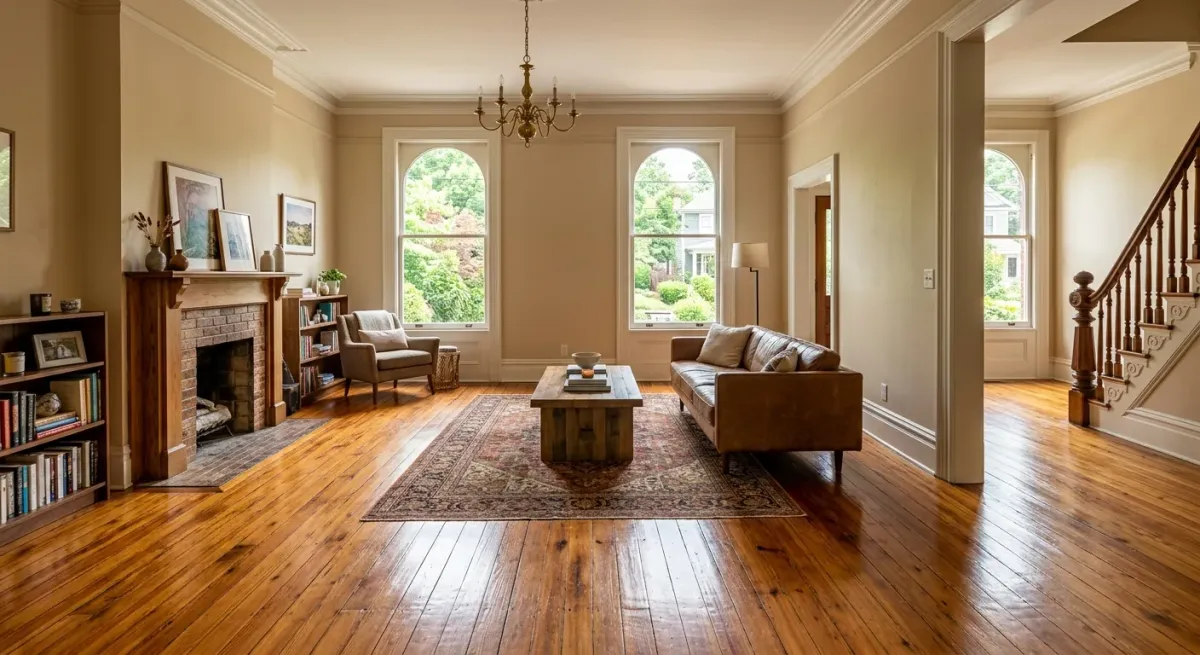
Repairs We Handle Across All Floor Types
- 01
Hardwood: plank replacement, re-nailing, cupping correction, and wood floor refinishing on repaired sections
- 02
LVP and laminate: plank swaps, seam repairs, re-floating sections after water intrusion
- 03
Tile and ceramic: single-tile replacement, re-grouting, substrate correction before new tile goes down
- 04
Subfloor: sistering joists, replacing rotted or water-damaged sheathing, leveling before any new flooring installation
The Full-Service Difference
Abner Flooring and Remodeling isn't a flooring-only shop. Owner Chucky Sarmiento and the crew handle everything from the subfloor up through the finished walls, which matters when a flooring repair connects to drywall damage, baseboard removal, or paint touch-ups.
- Available 7 days a week
- Call or text any day, including weekends -- we don't go dark on Friday afternoon
- One crew from diagnosis to finish
- No subcontractors handed your project off to someone we've never worked with
- Baseboard and trim handled in-house
- We remove and reinstall or replace [trim work](/trim-work/) as part of the repair, not as a separate call
- Drywall and paint covered when needed
- If the repair exposes wall damage, [drywall installation](/drywall-installation/) and interior painting stay under the same job
Get Your Floor Fixed This Week
We're available 7 days a week throughout the Greater Atlanta metro, including Alpharetta, Tucker, Lawrenceville, and the surrounding communities.