
Family-owned · Atlanta Local
Stair Flooring Installation
We cover treads, risers, and nosing so your stairs match every floor in the house.
Free estimate
Tell us what you need
Three fields. It reaches a person here, not a call centre.
Flooring That Works on Every Stair
Stair flooring is one of the most skipped line items in a flooring project, and it's almost always a mistake. Abner Flooring and Remodeling installs hardwood, LVP, and tile flooring on staircases throughout the greater Atlanta metro, handling treads, risers, nosing, and the trim that ties it all together. If you're replacing floors on one level or throughout the whole house, finishing the stairs with the same material creates a look that actually holds together. Call or text (404) 706-8999 and we'll walk you through what makes sense for your staircase specifically.
Stair work is technically different from flat floor installation. Treads take more foot traffic per square inch than any other surface in the home, so material choice and fastening method matter more here. We cut and fit each tread individually, secure risers tight so there's no flex or squeak, and install a proper nosing that meets code and won't chip or delaminate over time. What drives the cost up: the number of stairs, whether the existing substrate needs work, the material you choose, and whether we're wrapping open sides or capping a bullnose. Hardwood flooring on stairs runs higher than LVP because of the milling involved, but both options outlast carpet by years when installed correctly. Every job is different -- contact Abner Flooring and Remodeling for an accurate estimate.
Material Options
Hardwood, LVP, and Tile for Stairs
The right material depends on traffic, household needs, and what's already on your floors.
Hardwood Stair Treads
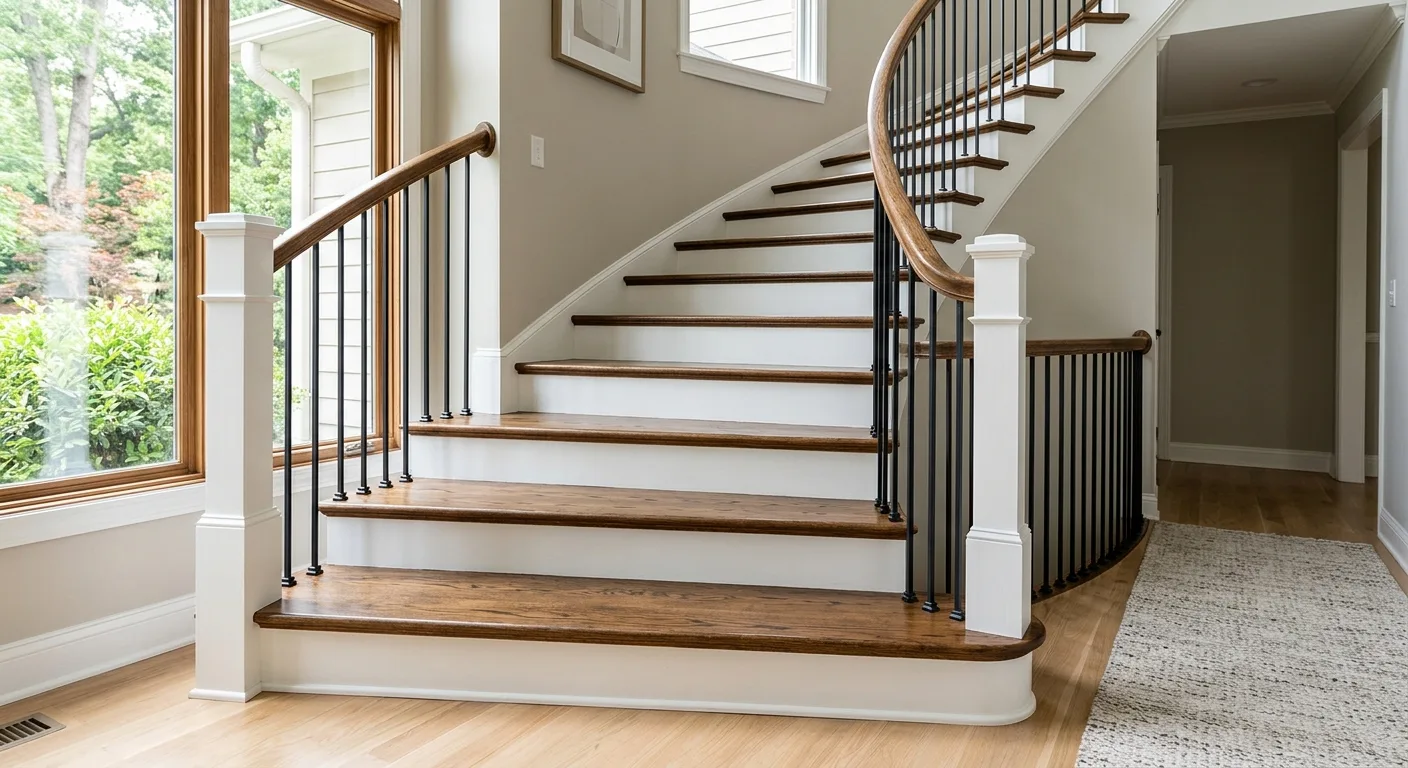
Solid hardwood treads are the most durable option for a staircase that gets daily use. We mill them to fit, sand them flush, and finish them to match your wood floor installation on the adjacent levels. Hardwood can also be refinished down the road when the surface shows wear.
LVP Stair Installation
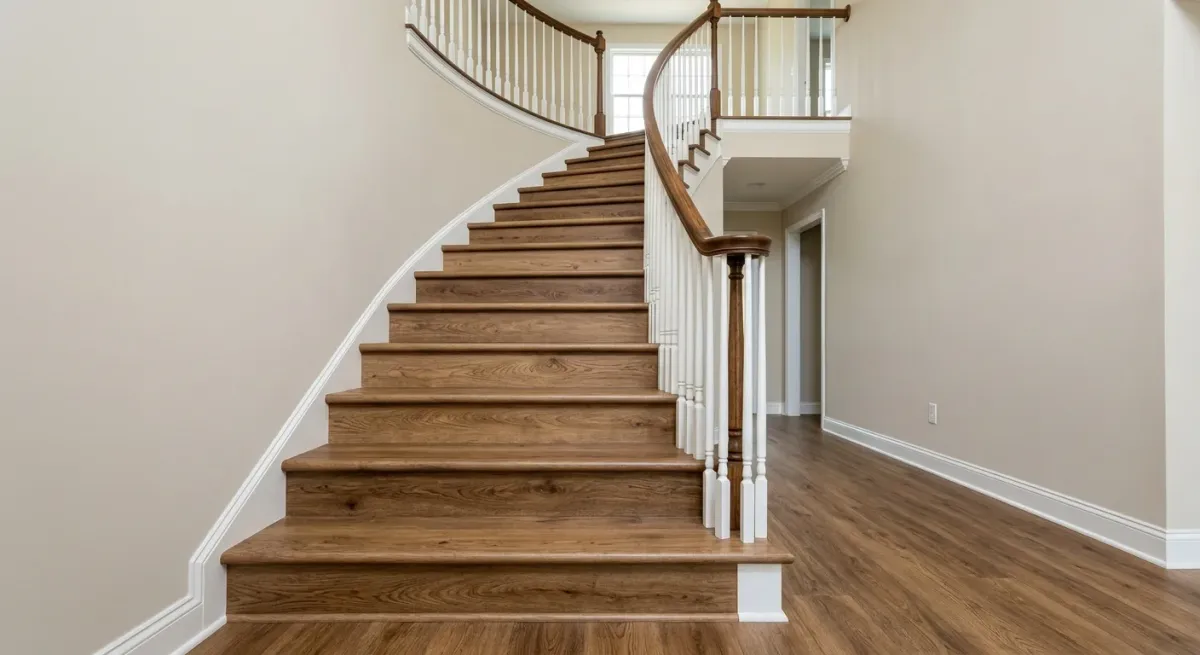
Luxury vinyl plank on stairs is our most requested option right now. It handles moisture better than hardwood, costs less, and installs faster. We use stair-nose profiles designed for LVP so the edge is finished and safe. A good match to LVP flooring you already have or plan to install.
Tile Stair Treads
Porcelain and ceramic tile work well on stairs that connect to a tiled landing or entryway. We set each tread with the correct adhesive and grout, with a bullnose or stair-nose tile finishing the front edge. Not the right call for every staircase, but for the right application it looks sharp and holds up hard.
Our Process
How We Install Stair Flooring
Stairs aren't flat floors with extra steps. The install sequence matters for a result that doesn't squeak, shift, or fail at the nosing.
- 01
Assess and Prep
We check each tread for flex, squeak, and levelness. Any loose or damaged substrate gets secured or replaced before the new material goes down. Skipping this step is why stairs creak six months after installation.
- 02
Cut, Fit, and Fasten
Each tread and riser is measured and cut individually. We don't use a single template for the whole staircase -- houses settle and measurements shift. Fastening method depends on material: glue-down, nail-down, or a combination.
- 03
Nosing and Trim
The nosing is the edge that takes the most abuse. We install a proper stair nose that's matched to your material and secured so it won't lift or pop. Then we add matching baseboard installation trim at the base of the stairs where they meet the floor.
Full-Service Scope
Stairs Are Part of a Bigger Project
- Stair installation paired with main-level flooring projects
- Refinishing as an alternative to full stair replacement
- Matching nosing and trim to existing or new flooring
- Riser and tread replacement on staircases with damaged sections
- Open-side stair wrapping and bullnose capping
What Skipping the Stairs Actually Costs
- 01
Uneven Wear
Every person in the house steps in the same spot on every tread. Carpet wears out in that strip first. Hard flooring distributes the wear differently and lasts longer.
- 02
Cleaning Difficulty
Hard stair treads clean in seconds. Carpet on stairs holds dust, hair, and debris in corners that no vacuum fully reaches. That's a maintenance problem that compounds over years.
- 03
Visual Break
New floors throughout a home with old carpet on the stairs draws the eye immediately. Finishing the stairs closes the visual gap and makes the whole project look intentional.
Stair Flooring Questions
Can LVP be installed on stairs safely, or will it slip?
My stairs have a slight bow to some treads. Does that need to be fixed before you install flooring?
Is it possible to match my existing hardwood floors on the stairs if the wood species is older?
How long does a typical stair flooring project take?
Do you install flooring on stairs in rental properties and investment homes?
What is the nosing on a stair tread and why does it matter?
Stair Flooring Across the Metro
We install stair flooring in homes across the greater Atlanta metro, including older two-story craftsman homes where the original stair treads are still in place and newer construction where the stairs were never finished past carpet. Areas we cover regularly:
Get Your Stairs Finished Right
One crew. Treads, risers, nosing, trim, and the floors they connect to.