
Family-owned · Atlanta Local
Sandless Floor Refinishing
Restore your hardwood's natural finish without the dust, mess, or cost of a full sand-down.
Free estimate
Tell us what you need
Three fields. It reaches a person here, not a call centre.
When Sandless Refinishing Is the Right Call
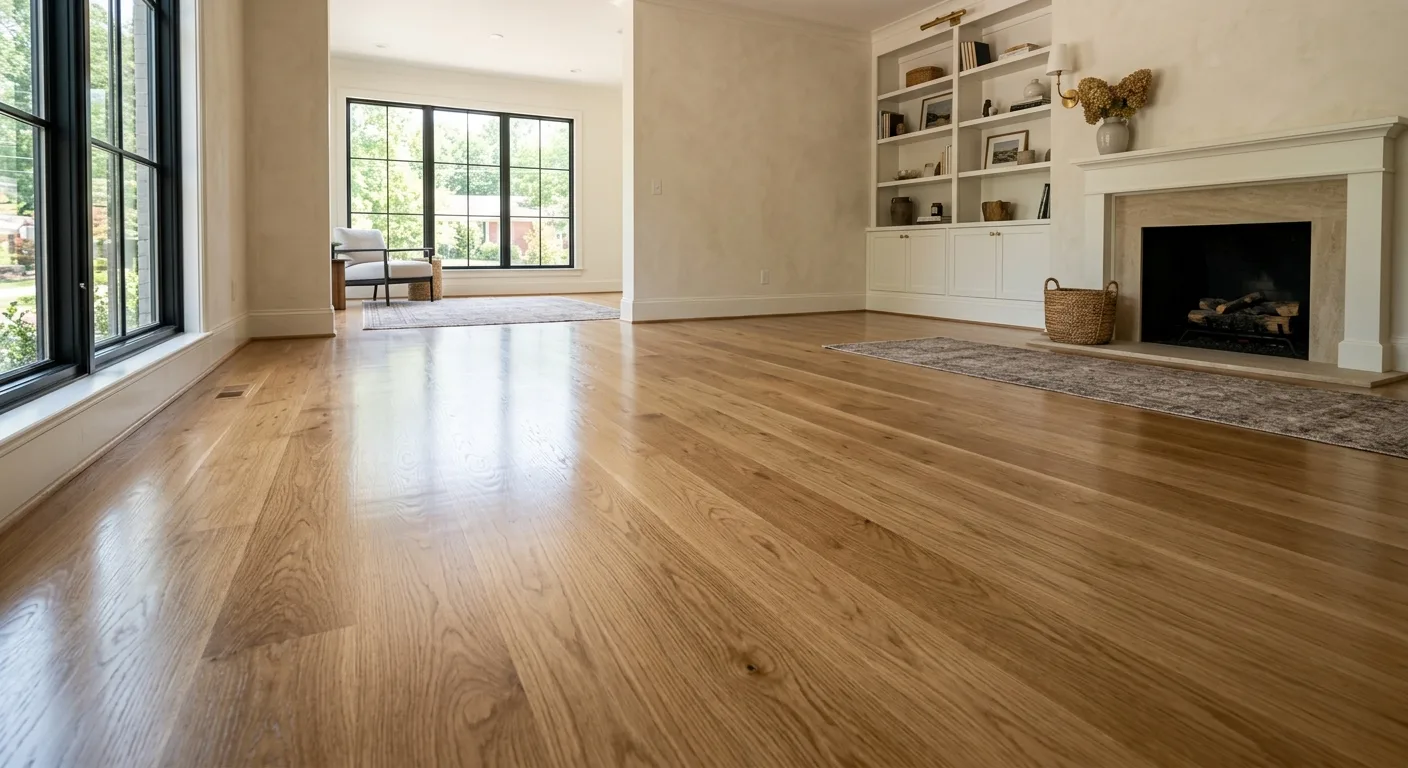
Sandless floor refinishing is exactly what it sounds like: we restore the sheen and protective coat on your existing hardwood floors without grinding the wood down to bare grain. At Abner Flooring and Remodeling, we offer this service across the Greater Atlanta metro for homeowners whose floors have lost their luster but still have plenty of life left in the wood underneath. If your floors look dull, scuffed, or just tired, sandless refinishing is often the fastest way to bring them back. Call or text (404) 706-8999 and I'll tell you honestly whether it's the right call for your situation.
The process works by lightly abrading the existing finish coat, cleaning the surface thoroughly, and applying fresh finish layers to bond with what's already there. It skips the aggressive sanding that full wood floor refinishing requires, which means no clouds of fine dust moving through your home, faster dry times, and a lower overall cost. That said, sandless refinishing has real limits: it doesn't fix deep gouges, boards with significant finish wear-through, or floors that have been refinished so many times the wood is too thin to sand even lightly. Before I commit you to anything, I take a close look and give you a straight answer. Cost depends on square footage, current finish condition, and how many coats the job needs. Every job is different -- contact Abner Flooring and Remodeling for an accurate estimate.
What Sandless Refinishing Actually Fixes
Knowing the limits of this process is just as important as knowing what it does well.
The Process
How We Refinish Your Floors Without the Dust Storm
- 01
Surface Prep and Scuff
We clean the floor completely, then run a fine-grit screen over the existing finish to give the new coats something to grip. No orbital sander, no airborne dust cloud filling your HVAC. We use dust-containment practices throughout to keep the rest of your home clean.
- 02
New Finish Application
Once the surface is prepped, we apply fresh finish in multiple coats, allowing proper dry time between each pass. We work with both water-based and oil-based products depending on the look you want and how you use the space.
- 03
Cure and Walk-Through
We let the final coat cure before foot traffic returns, then walk you through the finished floor together. If something isn't right, I want to know about it before we pack up -- not three days later.
Full Service
Refinishing Is Rarely the Only Thing That Needs Doing
Is Sandless Refinishing or Full Sanding Right for Your Floor?
Choose Sandless If...
Your finish is dull, scuffed, or peeling lightly but the wood itself is solid. Good candidates still have an intact topcoat, haven't been water-damaged, and haven't had so many previous sand jobs that the wood is thin. Sandless is faster, cheaper, and disrupts your household far less.
Choose Full Refinishing If...
The finish has worn through to bare wood in high-traffic areas, there are deep scratches or stains in the grain, or the floor has cupped boards that need leveling before any finish will sit flat. Full sanding removes material and resets the surface entirely.
Not Sure? Get an Honest Assessment
I'm not going to sell you a full sand job when a screen-and-recoat will do the work. That costs you more and takes longer, and you'd find out eventually that it wasn't necessary. I'd rather give you the right recommendation and have you call me for the next job.
Older Homes Need Extra Care
Craftsman bungalows and mid-century homes throughout the metro often have original hardwood that's been refinished several times already. Those floors require a careful thickness check before we decide on the process. We've worked on plenty of them, and we know what to look for.
What Affects the Cost of Floor Refinishing
- 01
Square Footage
More floor means more material and more labor time. Larger open-plan spaces are actually more efficient to work than the same footage broken across multiple small rooms with lots of transitions.
- 02
Current Finish Condition
A floor that's uniformly dull is faster to prep than one with inconsistent finish thickness, old wax buildup, or spot repairs from previous work. The prep step is where most of the labor lives.
- 03
Finish Type and Coat Count
Water-based finishes dry faster and have lower odor; oil-based finishes are more durable and give a richer amber tone. More coats mean a harder, longer-lasting surface -- and a slightly longer project timeline.
- 04
Repairs Needed Before Refinishing
Loose boards, squeaks, small gaps, or damaged sections need to be addressed before finish goes down. We handle those as part of the same visit so nothing gets buried under a fresh coat.
Frequently Asked Questions
How much does floor refinishing cost?
Is it cheaper to refinish or replace hardwood floors?
How many times can a hardwood floor be refinished?
How long does sandless floor refinishing take to dry?
Can sandless refinishing fix deep scratches or pet stains?
Do I need to move all my furniture before you arrive?
Ready to Restore Your Floors?
Call or text anytime -- we're available 7 days a week.