
Hours vary Atlanta (404) 706-8999
Abner Flooring and Remodeling
Commercial Epoxy Floor Installers

Family-owned · Atlanta Local

Commercial Epoxy Floor Installers

Garage floors, basement slabs, and commercial concrete coated to a hard, seamless finish.

Free estimate

Tell us what you need

Three fields. It reaches a person here, not a call centre.

No obligation · Responds within 1 business day


By submitting this form you agree that we may contact you about your request and share your details with partner companies for marketing purposes.

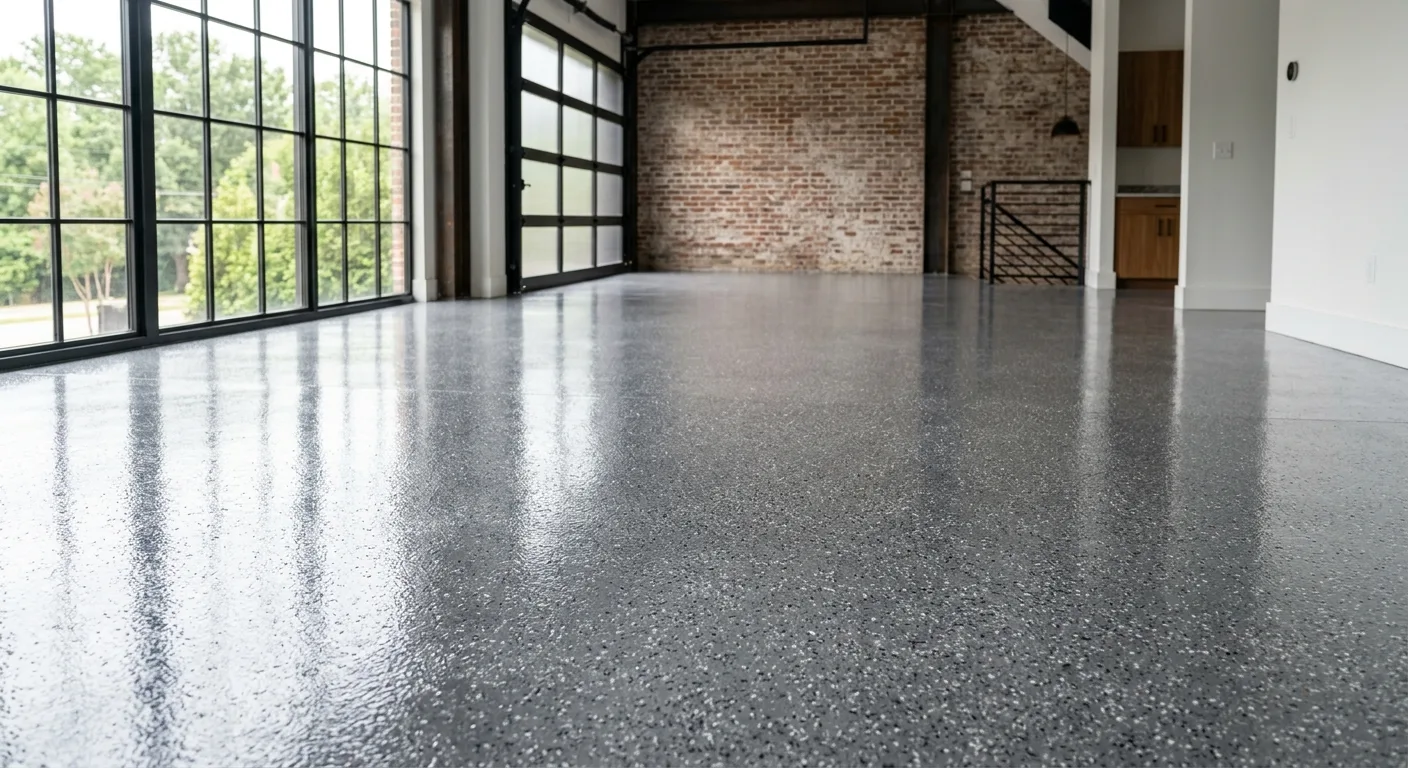
Epoxy Coating from Commercial Installers

Abner Flooring and Remodeling installs epoxy floor coatings on garages, basements, commercial slabs, and concrete surfaces throughout the Greater Atlanta metro. If you're searching for commercial epoxy floor installers who handle the full job from surface prep to final coat, this is the call to make. Most flooring contractors skip epoxy entirely. We do it as a core service, and we're available 7 days a week to schedule your estimate. Call or text (404) 706-8999 and we'll get eyes on the slab before anyone else calls you back.

Good epoxy work starts with the concrete, not the coating. We grind or acid-etch the slab to open the surface so the epoxy bonds at the molecular level rather than peeling off six months later. What drives cost on any epoxy job: square footage, current slab condition (cracks, spalling, oil stains that need degreasing), number of coats, finish type (solid color, flake broadcast, metallic), and whether you need a topcoat sealer for chemical resistance. A single-car garage floor is a different scope than a 5,000-square-foot commercial bay. Every job is different -- contact Abner Flooring and Remodeling for an accurate estimate.

What Epoxy Coating Actually Involves

01

Slab Preparation

We grind or chemically etch the concrete surface before a drop of epoxy touches it. This step is where cheap installers cut corners -- skip it and the coating peels within a year. We don't skip it.

02

Crack and Spall Repair

Active cracks get filled with epoxy filler or polyurea before coating. A coat laid over an unrepaired crack just telegraphs that crack back to the surface inside a season.

03

Primer Coat Application

A penetrating primer coat seals the concrete and creates a bonding layer for the base coat. On porous or older concrete, this step determines whether the finish lasts three years or fifteen.

04

Base Coat and Broadcast

We apply the base epoxy coat to the prepared slab and, where the finish calls for it, broadcast decorative flakes or aggregate into the wet surface before it sets.

05

Topcoat Sealer

A polyaspartic or urethane topcoat seals the finish, adds UV stability, and determines the gloss level and chemical resistance of the final floor. This is what makes a floor washable, not just good-looking.

Why It Matters

Floors That Skip Proper Prep Don't Last

Honestly, most epoxy failures are prep failures. The coating itself is fine -- what went wrong is the contractor who shot a coat over a dusty, oily, or unground slab and called it done. We've seen it. Concrete is porous and the surface layer is weak. You have to remove it mechanically or chemically before the epoxy has anything real to bond to. On a properly prepped slab, a quality epoxy system is one of the most durable floor surfaces available -- harder than most tile, fully seamless, and impervious to the motor oil, water, and road salt that destroy bare concrete in Atlanta garages over a decade. If another installer gave you a quote that didn't mention grinding or etching, ask them why. The answer will tell you everything.
Flooring contractor

Finish Options

Solid Color, Flake, or Metallic

The finish you choose affects look, slip resistance, and long-term maintenance.

  1. 01

    Solid Color

    The cleanest look for commercial floors and garages. Typically a single pigmented base coat plus a clear topcoat. Shows surface imperfections more than other finishes, so prep work is especially visible here.

  2. 02

    Vinyl Flake Broadcast

    The most popular residential garage finish. Colored flake chips are broadcast into the wet base coat, then sealed with a clear topcoat. Hides minor surface variation, adds texture for slip resistance, and holds up well under tire traffic.

  3. 03

    Metallic Epoxy

    Pigment and metallic powder create a swirling, three-dimensional effect that reads differently from every angle. High-end look for showrooms, basements, and commercial spaces where the floor is part of the design.

  4. 04

    Quartz Aggregate System

    Quartz sand broadcast into the epoxy creates a textured, slip-resistant surface built for heavy use -- commercial kitchens, workshops, loading areas. Extremely durable and easy to hose down.

Our Process

How We Run an Epoxy Install

  1. 01

    Assess the Slab

    We inspect for cracks, moisture, oil contamination, and surface hardness. The condition of the concrete determines which prep method we use and whether any repairs are needed before coating.

  2. 02

    Prep, Repair, Prime

    We grind or etch the surface, fill cracks and voids with the right filler, then apply a penetrating primer. No shortcuts. This phase is the job -- the coating is just the finish.

  3. 03

    Coat and Seal

    Base coat goes down, decorative layer is applied if the spec calls for it, then topcoat seals the whole surface. We leave you a floor you can actually drive on, not just look at.

Epoxy Alongside the Rest of Your Project

One thing most flooring-only shops can't offer: we handle the floor and everything around it. Garage getting a full renovation? We can coat the floor, patch the drywall, and paint the walls as one project with one point of contact. Same story for basements -- pair a metallic epoxy floor with new lvp flooring in the adjoining room and we transition them cleanly without two separate crews stepping on each other's timeline. We also do tile flooring for kitchens and bathrooms, hardwood flooring for living areas, and trim work throughout -- so the epoxy floor in your garage doesn't have to be an isolated call. Clients in Alpharetta, Johns Creek, and Snellville have used us for exactly this kind of multi-room scope. Call (404) 706-8999 and tell us what you're working with.
Flooring contractor

Get a Free Epoxy Floor Estimate

Available 7 days a week. No waiting until Monday.

Frequently asked questions

How long does an epoxy floor coating last on a garage slab?
A properly prepped and applied epoxy system typically lasts 10 to 20 years in a residential garage under normal use. What shortens that lifespan is poor prep -- a coat applied over a dusty or oily slab can delaminate in under two years. The prep work is where durability is decided, not the product on the shelf.
Does the concrete need to be completely free of oil stains before coating?
Yes. Oil-contaminated concrete won't bond with epoxy, period. We use a degreasing process followed by mechanical abrasion to remove oil penetration before any primer or base coat touches the slab. Surface staining that looks faint can still cause delamination if it hasn't been properly treated, so we don't assume light stains are clean.
Can epoxy be applied over concrete with existing cracks?
Small, stable cracks can be filled with polyurea or epoxy crack filler before coating and the surface finished over them. Active or structural cracks are a different issue -- filling them cosmetically while the concrete keeps moving will reopen the crack through the coating. We assess each crack during the estimate and tell you what the repair actually requires.
How long does the floor need to cure before you can drive or walk on it?
Most epoxy systems allow foot traffic after 24 hours and vehicle traffic after 72 hours, though cure times vary by product, ambient temperature, and humidity. Cooler temperatures slow the cure. We'll give you a specific timeline for your install conditions -- pushing it too early causes surface impressions that can't be fixed without recoating.
What is the difference between epoxy and polyaspartic floor coating?
Epoxy is a two-part coating that bonds chemically with prepared concrete and builds a hard, thick film. Polyaspartic is a faster-curing topcoat with better UV stability -- it won't yellow under sunlight the way standard epoxy sometimes does. Most quality installations use both: epoxy as the base for build and adhesion, polyaspartic or urethane as the topcoat for UV resistance and surface hardness.
How much does epoxy floor coating cost for a two-car garage?
Cost depends on the slab's current condition, the finish type you choose, and whether crack repair or significant degreasing is needed before prep. A basic solid-color system on a clean slab is a very different scope from a full flake-broadcast system on a stained, cracked floor. Every job is different -- contact Abner Flooring and Remodeling for an accurate estimate.

Related