
Family-owned · Atlanta Local
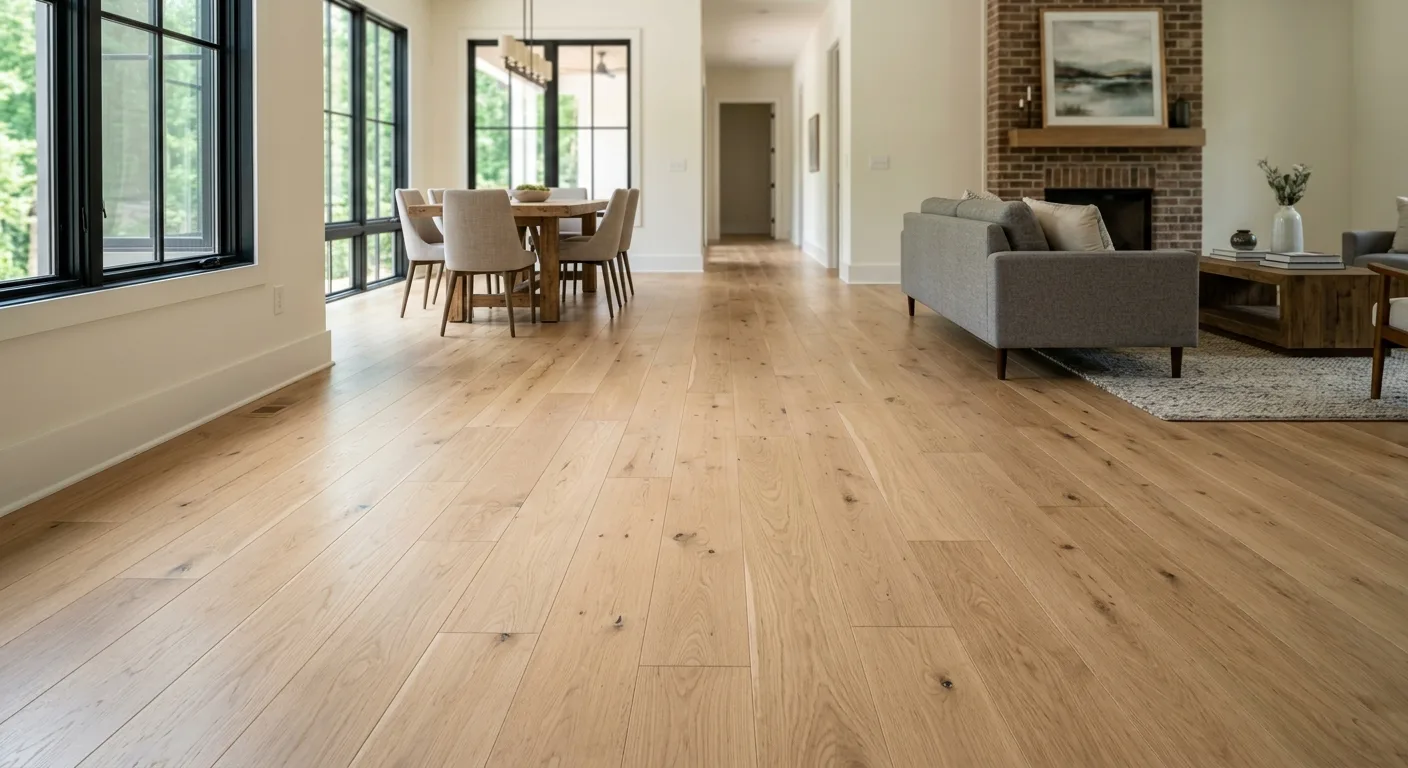
Hardwood Floor Installation in Atlanta
Solid and engineered wood installed right from subfloor to finish coat.
Free estimate
Tell us what you need
Three fields. It reaches a person here, not a call centre.
Hardwood Floor Installation for Atlanta-Area Homes
Abner Flooring and Remodeling specializes in hardwood floor installation across Atlanta and the Greater metro, covering everything from solid oak in a Decatur craftsman bungalow to wide-plank engineered hardwood in a Buckhead new-build. If you're comparing contractors and wondering what separates one crew from the next, the answer almost always lives in the subfloor: whether they actually prep it, whether they check for moisture, whether they let the wood acclimate before the first nail goes down. We do all three, every time. Call or text (404) 706-8999 to get a free estimate from Chucky Sarmiento and the Abner crew.
The cost of hardwood installation varies based on the species and grade of wood you choose, the square footage, subfloor condition, whether the layout requires intricate pattern work or stair integration, and the finish type you want. Solid hardwood and engineered hardwood are priced differently, and the scope of prep work on an older Atlanta home can add to the timeline. Across the region, installed hardwood projects range considerably, from straightforward rooms to full-home renovations. Every job is different -- contact Abner Flooring and Remodeling for an accurate estimate.
What Goes Into Every Wood Floor Install
The visible result is only as good as everything underneath it.
Solid vs. Engineered
Which Wood Type Fits Your Home
The honest answer depends on your subfloor, your moisture levels, and your budget.
Solid Hardwood
Milled from a single piece of timber, typically 3/4-inch thick. It's the traditional choice in older Atlanta craftsman homes and can be sanded and refinished multiple times over its lifetime. Requires a wood subfloor and is not a good fit for below-grade installations or rooms with high moisture variation -- think basements or some ground-floor slabs.
Engineered Hardwood
A real wood veneer bonded to a cross-ply plywood core. Engineered hardwood is dimensionally more stable than solid, handles humidity fluctuation better, and can go over concrete subfloors. The veneer layer determines how many times it can be refinished -- a thicker wear layer means more life. For Atlanta's older homes with concrete slab additions, engineered is usually the smarter call.
Species and Grade
Oak is the workhorse -- it's durable, widely available, and takes stain predictably. Hickory and maple run harder. Walnut gives you deeper color with more character grain patterns. Grade affects how much character variation (knots, mineral streaks) appears in the boards. We'll show you samples and tell you which species performs best for your traffic load -- there's no reason to guess.
Finish Options
Site-finished floors are sanded and coated after installation, giving you the most customization -- stain color, sheen level (matte to satin to semi-gloss), and finish type (oil-modified polyurethane vs. water-based). Prefinished wood arrives with a factory coat already on, which means faster installation and less disruption. Each approach has tradeoffs we'll walk through with you before anything gets ordered.
Our Process
How We Handle the Installation
- 01
Inspect and Prepare
We assess the subfloor for levelness, moisture content, and structural integrity. Any issues get corrected before the wood arrives. We also protect adjacent rooms using dust-containment systems during sanding phases -- your furniture and HVAC don't need to absorb the job.
- 02
Acclimate and Install
Wood material stays on-site in the installation room until it's reached equilibrium with the space. Then we establish layout lines, cut the first rows, and work the install across the floor using the appropriate fastening method for the material and subfloor combination.
- 03
Sand, Finish, and Walk
Site-finished floors get sanded smooth, stained if you've chosen a color, and coated in finish layers with proper dry time between each coat. We won't call the job done until we've walked the floor with you, confirmed the grain, the color, and the edges all look right, and you've signed off.
The Full-Renovation Advantage
Flooring is rarely the only thing that needs doing -- we cover the rest too.
What Makes a Floor Last 30 Years
- 01
Correct moisture barrier installation
Wood and moisture are a bad combination. We install vapor barriers and underlayments appropriate to the subfloor type and the ambient conditions of the space -- especially critical on slab foundations common in many Atlanta-area builds.
- 02
Proper board acclimation
Wood that goes in too dry will swell. Wood that goes in too wet will shrink and gap. Acclimation to the room's temperature and humidity before installation is the cheapest insurance you can buy on a wood floor.
- 03
Consistent fastener spacing
Nail spacing that's too wide creates movement that eventually shows up as squeaks or loose boards. We follow the manufacturer's specification -- not our own shortcut -- for every species we install.
- 04
Finish coat application by surface condition
Finish coats applied to a floor that hasn't been sanded flat enough, or applied too thick, or applied in the wrong ambient temperature will peel, bubble, or wear unevenly. Getting this right requires actual experience with the product -- not just reading the can.
Hardwood Floor Installation FAQ
What's the difference between nail-down and glue-down hardwood installation?
How long does acclimation take before hardwood can be installed?
Can hardwood floors be installed over a concrete slab?
How many finish coats does a site-finished hardwood floor get?
When does an existing hardwood floor need full replacement versus refinishing?
Schedule Your Hardwood Floor Estimate
Call or text Chucky and the Abner crew any day of the week.